Commercial Furniture Relocation: How Vector Installation Services Ensures a Seamless Transition
By the Vector Installation Services Team – Experts in Office Relocation and Furniture Logistics
At Vector Installation Services, we understand that relocating office furniture requires more than just moving trucks and muscle. It demands a specialized strategy designed to protect assets, reduce downtime, and streamline your company’s transition. In the modern corporate landscape, selecting from various office furniture relocation companies requires a deep understanding of compliance, insurance, structural safety codes, and logistics. This guide outlines how to vet commercial movers, understand the necessity of Certificates of Insurance (COIs), verify carrier credentials, and leverage buffer staging to ensure a successful business relocation from start to finish.
1. Strategic Planning for Office Furniture Relocation
We begin each commercial project with a comprehensive evaluation of your existing furniture and office layout. This includes identifying disassembly requirements for systems furniture, cataloging assets, and reviewing the blueprints of your destination space to plan for efficient reassembly. No two commercial transitions are identical. We develop custom relocation plans based on the size, sensitivity, and structure of each furniture item—ensuring every piece is moved safely and efficiently using the right equipment and packaging materials. This pre-planning phase includes coordination with facility directors to establish a step-by-step sequence that fits your corporate operating schedule.
2. How to Vet Commercial Relocation Specialists
Vetting relocation partners is critical to avoiding costly operational delays or property damage. Unlike simple household moves, commercial furniture relocation involves complex systems furniture (such as Herman Miller, Steelcase, or Haworth cubicles), integrated electrical components, and strict facility regulations. When vetting companies, facilities managers should look for:
- Commercial-Only Specialization: Ensure the service provider focuses exclusively on B2B commercial logistics rather than splitting focus with domestic consumer moves. Commercial movers have the specialized equipment, training, and mindset required for corporate environments.
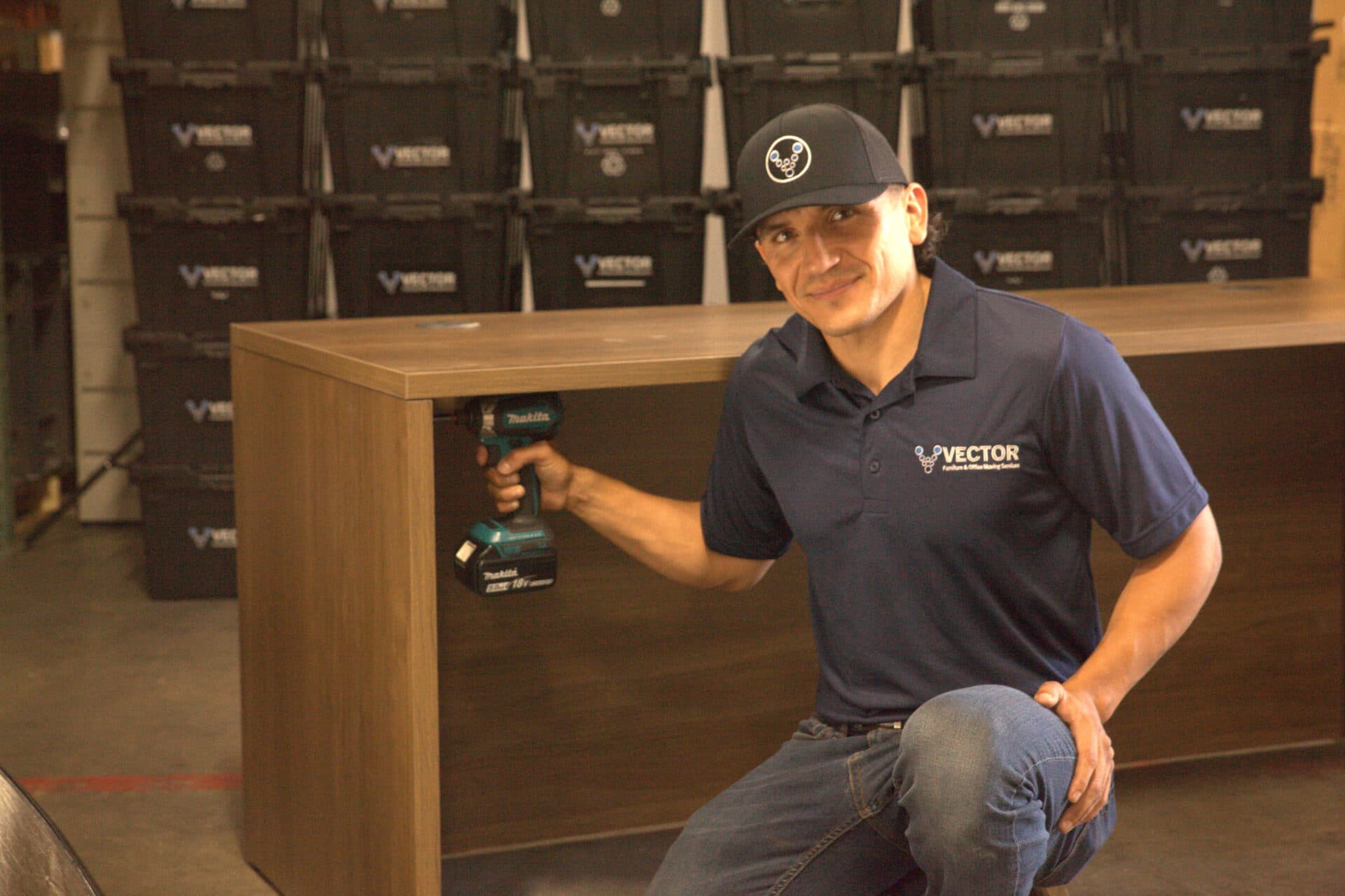
- In-House Installation Crews: Many moving companies subcontract the teardown and assembly of cubicles to third-party installers, leading to communication breakdowns. Vector utilizes dedicated, in-house installation specialists who are factory-certified to assemble and reconfigure all major brands of modular workstations.
- Client Testimonials and Corporate Case Studies: Ask for references from businesses of similar size and industry. A proven track record in complex projects like laboratory transitions, financial offices, or high-rise corporate relocations is the best indicator of capability.
3. Verifying Credentials and California Licensing
A legitimate commercial furniture relocation company must possess all required federal and state licensing credentials. Operating with an unlicensed carrier can lead to asset seizure, building fines, or complete loss of insurance coverage in the event of an accident. Verify the following credentials:
- California Public Utilities Commission (CPUC) Licensing: For moves within the state of California, carriers must hold active permit authority, which ensures compliance with safety regulations and standard financial disclosures.
- Federal Motor Carrier Safety Administration (FMCSA) Registration: For interstate moves, verify the mover's US DOT number and active operating authority through the federal portal.
- OSHA Safety Standards: Check that the mover's crew is trained in OSHA safety standards, particularly regarding heavy lifting, scaffolding, and the operation of mechanical rigging equipment.
4. The Importance of Certificates of Insurance (COIs)
Commercial landlords and property management groups will not permit a moving crew to step foot on their property without a valid Certificate of Insurance (COI). This document protects the property owner from liability in the event of building damage or worker injury. When requesting a COI, ensure it covers:
- General Liability Limits: Most Class-A office buildings require a minimum of $2,000,000 to $5,000,000 in general liability coverage, with the landlord and building management group named as additionally insured.
- Workers' Compensation: Relocation crews must be fully covered by workers' compensation insurance to protect your business from liability if a mover is injured on your premises.
- Cargo Insurance: Verify that the carrier provides sufficient cargo coverage to replace high-value assets, such as executive conference tables or server racks, in the event of damage during transit. Vector Installation Services handles all COI requests within 24 hours, coordinating directly with your building’s property manager to ensure approval before the move date.
5. Utilizing Buffer Staging and Off-Site Warehousing
A major challenge in office moves is coordinate timing when lease terms do not perfectly align, or when construction at the new office is delayed. To prevent business disruption, Vector offers buffer staging services:
- Secure Off-Site Storage: We transport and store your systems furniture, desks, and filing units in our clean, climate-controlled commercial warehouse until the new facility is ready.
- Sequential Delivery: Once the new office is cleared for occupancy, we deliver and install assets in phases. Workstation panels and power cabling are delivered first, followed by work surfaces, seating, and personal storage bins. This phased approach allows IT teams to install computers and phones while our crew completes assembly, cutting total downtime in half.
Vetting Criteria Comparison Table
To help operations directors compare different levels of moving providers and determine what credentials are required for various facility scales, refer to the table below:
Service Provider Type | Licensing & Credentials | Insurance & COI Capability | Staging & Logistics Capabilities | Best Application |
|---|---|---|---|---|
| Consumer/Household Movers | Basic state permit; lacks commercial carrier authority. | Low liability limits ($500k-$1M); unable to meet Class-A COI demands. | No commercial storage; limited to direct truck transfer; lacks panel assembly tools. | Not recommended for commercial workspaces. |
| Standard Commercial Carriers | Active state licensing (CPUC); basic DOT credentials. | Standard $1M-$2M COI; can name building owner as additionally insured. | Basic transit; limited buffer storage; basic disassembly of standard desks. | Small offices (under 20 employees) with simple, non-modular furniture. |
| Vector Installation Services | Full CPUC permit; FMCSA interstate authority; OSHA safety certified. | Up to $5M in General Liability; full Workers' Comp; high-value cargo coverage. | Large-scale commercial storage; phased buffer staging; factory-certified modular assembly. | Mid-to-large offices, high-rises, corporate parks, and complex reconfigurations. |
Building Protection and Property Safety
In addition to securing proper insurance, a professional relocation specialist must protect the physical property during the move. Vector Installation Services protects your corporate lease by applying full building protection. We lay down 1/8-inch Masonite boards to cover marble, wood, and carpeted floors along the transit corridor. Drywall corners are fitted with plastic corner guards, and doorjambs are wrapped in padded sleeves to prevent damage. Freight elevators are lined with heavy-duty cab blankets. This thorough approach prevents damage claims and ensures that your move-out matches building management requirements.
Conclusion
Relocating furniture during a business move demands a well-planned, expert-driven approach. By partnering with Vector Installation Services, you work with a trusted partner focused on safety, compliance, and long-term value. We handle the licensing, insurance, staging, and structural anchoring required to protect your business assets, ensuring you settle into your new workspace without missing a beat.
Ready to Plan Your Commercial Relocation?
Contact Vector Installation Services today for a free consultation and project plan! Call us at (714) 631-7451 or email alex@vectorinstallations.com.